Before the trade · The evidenceThe Evidence
The Numbers This Industry Repeats Without Checking
Everyone quotes the same figures. We went looking for the documents behind them — and found that one of the two most famous numbers has a real study behind it, and the other does not.

Key takeaways
- A figure very close to "90% lose money" does exist, in a French regulator's study of 14,799 retail accounts covering 2009 to 2012.
- It is narrower than the slogan: it describes clients of authorised forex and CFD providers in one country, and the one-year figure is a range, not a single number.
- The British and European regulators published their own measurements, and they do not agree on a single number either — 82% in one sample, a 74–89% range across the EU.
- We could not trace "95% fail in the first year" to any study or official document, and we are not aware of one.
- The academic day-trading data cuts both ways: around a fifth were profitable in a typical year, but fewer than one in a hundred stayed that way.
In this article · 8 sections
The short answer
There is a real, published, regulator-run study behind a number very close to "90 per cent of traders lose money". It is not the study anyone cites, because almost nobody citing the figure has looked for one.
The French market regulator, the Autorité des marchés financiers, collected four years of account data from authorised forex and CFD providers covering 14,799 active retail investors between 2009 and 2012, and reported that 90 per cent of those clients lost money. That is a genuine finding, and it is checkable: the study is summarised in the AMF's own newsletter, which is still online.
What it is not is the sentence it has become. It describes clients of regulated leveraged providers in one country over one four-year window. It is not a measure of "traders" generally, it is not a failure rate, and it does not say that the other ten per cent made a living.
The second-most quoted figure — some version of "95 per cent fail in the first year" — we could not trace to anything. Not to a regulator, not to a study, not to an industry body. That does not prove no source exists. It does mean that nobody repeating it is in a position to tell you what it measures.
Why this is worth doing at all
This is a field where the sales pitch and the cautionary statistic are usually produced by the same people. A number that makes trading sound hard is useful to a course provider, because the implied next sentence is that the course is what separates you from the ninety per cent. It is useful to a broker, because a published loss rate satisfies a disclosure obligation. It is useful to a blog, because it is a strong opening line.
None of those uses requires the number to be right. So it is worth knowing which of these figures survive contact with their sources — and the exercise turns out to be more interesting than a debunking, because the real numbers are both worse and more specific than the slogans.
"90% of traders lose money"
What the document says
The AMF study is the closest thing to an origin. Its methodology is stated plainly: figures collected from significant regulated providers, not from unauthorised operators; annual data over four years, 2009 to 2012; 14,799 active retail investors; rolling spot forex, binary options and CFDs on currencies and on other underlyings.
The headline in the AMF's own editorial is that between 2009 and 2012, 90 per cent of clients lost money on these markets. The detail underneath it is more useful than the headline:
- Over a single year, the proportion of losing clients varied from 75 to 89 per cent depending on the provider and the year.
- Over the full four years, more than 89 per cent lost, with an average result of around minus €10,900 per client.
- In 2009 alone, more than 82 per cent lost, for an average of about minus €4,989. Over 2009 and 2010 together, more than 85 per cent lost, and the average loss deepened to about minus €10,183.
- Investors who placed at least 250 orders over the four years — 52 per cent of the population studied — lost an average of about €18,741.
- Investors whose average transaction size exceeded €10,000 — 62 per cent of the population — lost an average of about €14,876.
The AMF's own summary of the pattern is the part worth remembering: those who persevered only deepened their losses over time.
What it does not say
It does not say 90 per cent of traders. It says 90 per cent of clients of these providers, which is a population defined by having opened a leveraged account, not by any particular activity. It does not cover unauthorised operators, which the same document describes as a separate and worse problem. And it is a four-year cumulative figure: the one-year numbers are lower, and they are a range rather than a point.
The other regulators measured it too, and got different numbers
This is the part that gets lost when the figure is compressed into a slogan. Three regulators have now published measurements of the same thing, and they do not converge on one number — because they were measuring different populations in different years.
The United Kingdom. In December 2016 the Financial Conduct Authority published a consultation paper on CFD products. Its internal analysis of a random sample of client accounts from eight CFD firms found that 82 per cent of clients lose money on these products, and that the average result per client account was a loss of £2,200. The FCA's own framing in the same document is that a majority lose, with an approximate ratio of 82 per cent losing against 18 per cent making a profit.
Ireland. The same FCA paper records that in 2015 the Central Bank of Ireland examined client profitability among a sample of firms and found 75 per cent of investors lost, at an average of €6,900.
The European Union. When the European Securities and Markets Authority agreed its product intervention measures in March 2018, it stated that national regulators' analysis of CFD trading across EU jurisdictions showed that 74 to 89 per cent of retail investor accounts typically lose money, with average losses per client ranging from €1,600 to €29,000. That range is now embedded in the rules: where a provider has no figure of its own for the last calculation period, the standardised risk warning it must display refers to that 74–89 per cent range.
So the honest summary of the regulatory evidence is not a single percentage. It is: across every retail leveraged-trading population that has been measured by a supervisor, somewhere between roughly three-quarters and nine-tenths of accounts lost money over the period measured, and the average loss was large relative to what most people put in.
That is a stronger statement than the slogan, and it has four documents behind it.
"95% fail in the first year"
We went looking for this one and did not find it.
It is not in the FCA consultation paper. It is not in ESMA's product intervention documents. It is not in the AMF study. It does not match any academic result we have read, and the versions of it that circulate — ninety per cent, ninety-five per cent, "90 per cent lose 90 per cent in 90 days" — differ from each other in ways that suggest repetition rather than measurement.
Our position is therefore the narrow one: we have not been able to trace this figure to a study or an official document, and we are not aware of one. If a reader can point us to the original, we will say so here and link it. Until then it does not appear on this site as a fact, and an article that opens with it is telling you something about its research standards rather than about trading.
What the academic record adds
The regulators measured accounts. Researchers with access to whole-market data measured something more demanding: not whether people lost, but whether anyone was reliably good.
Taiwan, 1992–2006. Barber, Lee, Liu and Odean studied day traders across the entire Taiwanese market, where roughly 450,000 individuals day traded in an average year. In a typical year about 20 per cent of them earned profits net of fees. But only about 4,000 of them — fewer than one per cent of the population — went on to earn reliably positive abnormal returns net of trading costs in the following year.
Those two numbers belong together, and quoting either alone is misleading. A fifth of day traders finishing a year ahead is a much higher figure than the slogans imply. Fewer than one in a hundred repeating it is a much lower figure than any sales page implies. The gap between them is what the word "consistently" is doing.
Brazil, 2013–2017. Chague, De-Losso and Giovannetti observed everyone who began day trading Brazilian equity futures between 2013 and 2015. Of those who persisted for more than 300 days, 97 per cent lost money. Only 1.1 per cent earned more than the Brazilian minimum wage, and only 0.5 per cent earned more than a bank teller's starting salary — and the authors note that even those did so with great risk. Their conclusion is unusually blunt for a working paper: it is virtually impossible for an individual to day trade for a living, contrary to what course providers claim.
The United States, 1991–1996. The best-known study of ordinary investors is not about failure rates at all, and it is more useful for it. Barber and Odean looked at 66,465 households at a large discount broker. The households that traded most earned an annual return of 11.4 per cent; those that traded least earned 18.5 per cent; the market returned 17.9 per cent. Nobody in that sample "failed". They simply paid, in costs and in worse selections, for the frequency of their own decisions. We look at what that frequency does in the piece on trading too often.
How to read a loss statistic, in four questions
If you take one practical thing from this page, take these. They are enough to disqualify most figures you will meet.
- Which population? Clients of leveraged providers, day traders in one market, or everyone with a brokerage account? These are not the same people and their results are not comparable.
- Which period, and how long? Loss rates compound. The AMF data moves from 82 per cent over one year to more than 89 per cent over four, with the average loss more than doubling.
- Lost money, or failed? "Finished the period down" is not "blew up" and is not "quit". Most statistics measure the first and are quoted as if they measured the third.
- Who is quoting it, and what are they selling? A number that makes the next sentence of a sales pitch work deserves more scepticism than one that does not.
What we think this evidence actually supports
Not "most people fail", which is vague enough to be unfalsifiable. Something narrower:
Across every population a supervisor has measured, most retail accounts in leveraged products lost money over the period measured. Across whole-market academic data, a minority finish a year ahead and a much smaller minority do it again. And in the one dataset that followed people who kept going, persistence made the outcome worse rather than better.
None of that tells you what will happen to you, and this publication will not pretend otherwise. What it does is set the base rate against which any claim about method, tool or temperament has to be judged — including the claims made by anyone selling you a way out of the statistic. The behaviours that sit underneath these numbers are the subject of our guide to what the field calls trader psychology, and the single decision with the most evidence behind it is how much a mistake is allowed to cost.
Trading leveraged products carries a high risk of losing money quickly. The figures above are the regulators' own measurement of how often that happens. Nothing here is advice.
Sources and references
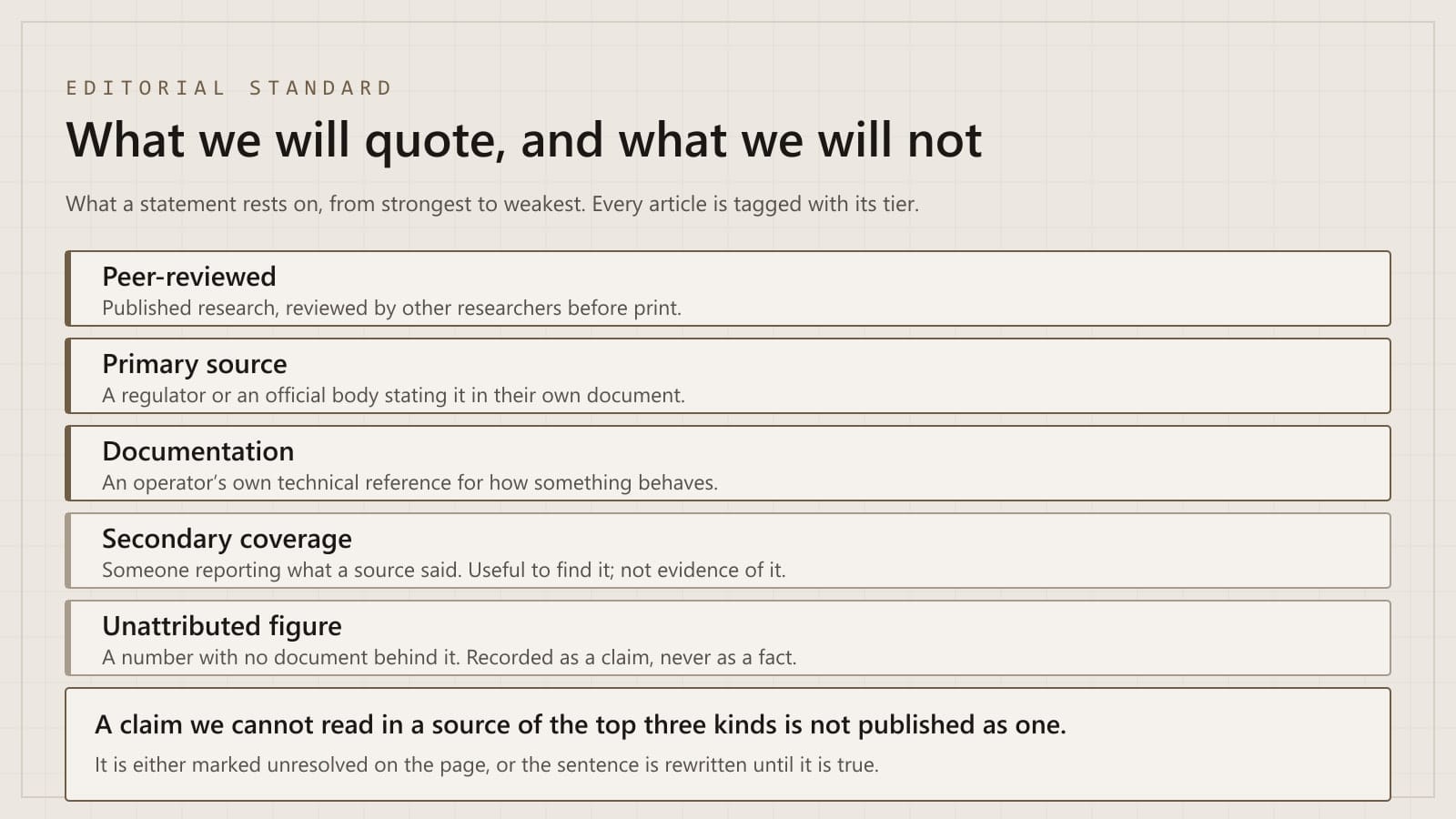
- Trading Is Hazardous to Your Wealth: The Common Stock Investment Performance of Individual Investors — The Journal of Finance (authors' copy, Haas School of Business, UC Berkeley)Peer-reviewed study · retrieved 6 October 2026
- The Cross-Section of Speculator Skill: Evidence from Day Trading — Journal of Financial Markets (authors' copy, Haas School of Business, UC Berkeley)Peer-reviewed study · retrieved 6 October 2026
- Day trading for a living? — Social Science Research Network (working paper 3423101)Peer-reviewed study · retrieved 6 October 2026
- ESMA agrees to prohibit binary options and restrict CFDs to protect retail investors — European Securities and Markets AuthorityRegulator · retrieved 6 October 2026
- Additional information on the agreed product intervention measures relating to contracts for differences and binary options — European Securities and Markets AuthorityRegulator · retrieved 6 October 2026
- CP16/40: Enhancing conduct of business rules for firms providing contract for difference products to retail clients — Financial Conduct AuthorityRegulator · retrieved 6 October 2026
- FCA proposes stricter rules for contract for difference products — Financial Conduct AuthorityRegulator · retrieved 6 October 2026
- La lettre de l'Observatoire de l'épargne de l'AMF, n° 10 — Forex : les particuliers perdants — Autorité des marchés financiersRegulator · retrieved 6 October 2026